

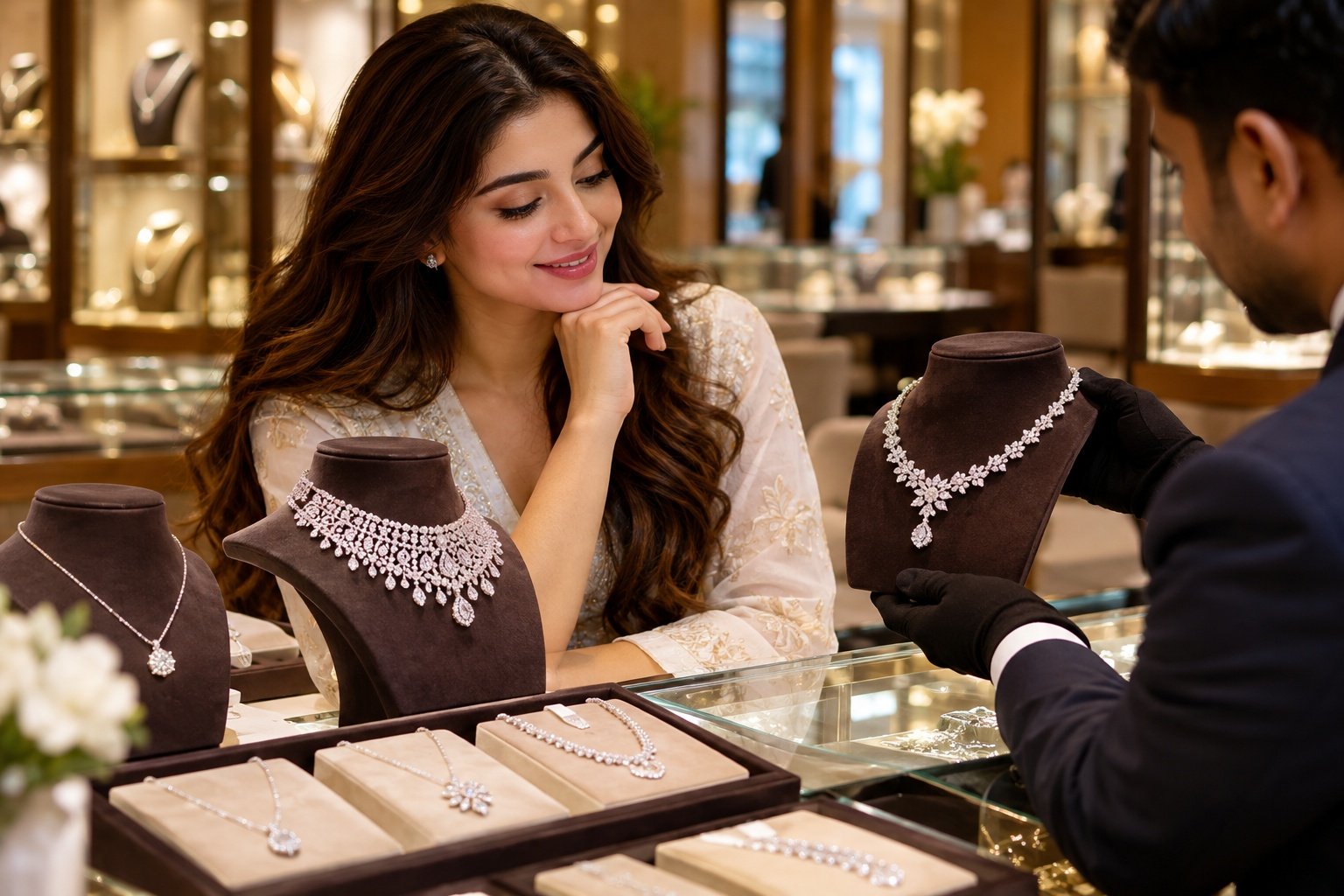
Quick Summary
Buying a diamond necklace involves considering diamond quality, cut, colour, clarity, carat weight, metal purity, craftsmanship, and price. Whether you are shopping for a wedding, anniversary, or festive occasion, understanding these factors helps you make a confident choice.
Rajpur Road is a popular shopping destination in Dehradun where you can explore different jewellery designs. Before buying, set your budget, compare styles, check diamond certification and gold hallmarking, and ensure the necklace offers quality, comfort, and lasting value.
If you are researching a diamond necklace shop in Dehradun, this guide explains the different necklace styles, diamond quality factors, pricing considerations, hallmarking, craftsmanship, shopping tips, and jewellery care practices that can help you choose a suitable piece.
What You’ll Learn
- How to understand different diamond necklace designs and their uses.
- What the four Cs of diamond quality mean.
- How to choose between gold, white gold, rose gold, and platinum.
- Which factors influence diamond necklace prices.
- Why diamond documentation, gold hallmarking, and invoices matter.
- How to assess craftsmanship, necklace length, and comfort.
- What to consider when shopping for diamond jewellery around Rajpur Road.
- How to match a necklace with your personal style and special occasions.
- How to maintain and protect your diamond necklace after purchase.
Introduction
Rajpur Road is one of Dehradun’s popular areas for shopping, dining, and spending a relaxed day exploring the city. From cafés and fashion boutiques to jewellery stores, the area offers plenty of options for people looking to combine everyday shopping with a special purchase. For anyone planning to buy fine jewellery, a diamond necklace can be a meaningful choice for weddings, anniversaries, family celebrations, or personal milestones.
However, buying a diamond necklace involves more than selecting a design that looks attractive in a display. Diamond quality, metal purity, craftsmanship, necklace length, and pricing transparency all contribute to the value of the purchase. Taking the time to understand these details can help you choose a piece that suits your personal style, budget, and intended use.
If you are searching for a diamond necklace shop in Dehradun, it is worth planning your shopping experience before visiting jewellery stores. Understanding different necklace designs, learning about diamond quality, and knowing which questions to ask can make the process more comfortable and rewarding.
Whether you prefer a delicate diamond pendant for everyday wear or an elaborate necklace for special occasions, this guide covers the essential things to consider before making your purchase around Rajpur Road.
1. Understanding Different Diamond Necklace Designs
Diamond necklaces come in a wide variety of styles, ranging from simple pendants to elaborate statement pieces. Understanding these designs can help you identify what suits your preferences and the occasions for which you intend to wear the jewellery.
Solitaire Diamond Necklaces
Solitaire necklaces feature a single prominent diamond, usually attached to a simple chain. Their appeal lies in their understated appearance and versatility.
A solitaire pendant can complement everyday clothing, office wear, and evening outfits without looking overly elaborate. It is a practical choice for someone who prefers jewellery that can be worn regularly rather than reserved for special occasions.
When choosing a solitaire necklace, consider the diamond’s cut, setting, and proportions. A well-cut diamond can reflect light beautifully, while a carefully selected setting can enhance its appearance and keep the stone secure.
Diamond Pendant Necklaces
Diamond pendant necklaces offer considerable variety in design. Popular styles include floral motifs, geometric patterns, teardrop shapes, hearts, and contemporary abstract designs.
A smaller pendant may be suitable for daily wear, while a larger design can create a more noticeable look for parties and celebrations. Pendant necklaces are also versatile gifting options because they are available in different styles and price ranges.
Before purchasing one, check whether the pendant’s weight is appropriate for the chain. A heavier pendant may require a stronger chain and a suitable attachment to prevent unnecessary wear.
Diamond Choker Necklaces
Diamond chokers sit close to the neck and are often chosen for weddings, festive celebrations, and formal events. Their designs may feature closely arranged diamonds, intricate patterns, or combinations of diamonds and precious metals.
Chokers can complement traditional outfits, evening gowns, and dresses with open necklines. Because they are worn close to the neck, fit and comfort are particularly important.
Try the necklace before purchasing it, if possible, and check that it does not feel restrictive. The clasp should be secure, and the overall construction should support comfortable wear throughout an event.
Traditional Diamond Necklaces
Traditional diamond necklaces often feature detailed patterns, symmetrical arrangements, and elaborate craftsmanship. Some designs combine diamonds with gold elements or other gemstones.
These necklaces can be suitable for weddings, family celebrations, festive occasions, and formal gatherings. Their detailed appearance may also make them a preferred choice for people who appreciate classic jewellery styles.
Examine the finishing, stone placement, and settings carefully. Consistent detailing and secure stone placement contribute to the necklace’s overall appearance and practicality.
Contemporary and Minimalist Designs
Contemporary diamond necklaces often feature clean lines, geometric shapes, and lightweight construction. They can include small diamonds arranged in simple patterns or subtle designs that complement modern clothing.
These styles are suitable for people who prefer understated jewellery and want pieces that can be worn across different occasions.
Rather than choosing a necklace solely because it follows a current trend, consider whether the design reflects your personal taste and whether you can imagine wearing it for several years.
2. How to Evaluate Diamond Quality Before Making a Purchase
Diamond quality is one of the most important factors to understand before buying a necklace. Two pieces may look similar at first glance but differ in their diamond characteristics, craftsmanship, and overall value.
The traditional four Cs—cut, colour, clarity, and carat weight—provide a useful starting point for evaluating diamonds.
Cut: How the Diamond Reflects Light
Cut refers to how a diamond has been proportioned and finished. It influences how effectively the stone reflects and returns light, contributing to its brilliance.
A well-cut diamond can appear bright and lively, while a poorly proportioned stone may look less brilliant even if it has a substantial carat weight.
When comparing necklaces, observe the diamonds under similar lighting conditions. If possible, examine the jewellery in more than one lighting environment rather than relying entirely on bright display lights.
Colour: Understanding Diamond Appearance
Conventional white diamonds are graded according to the degree of colour they exhibit. Colour can influence a diamond’s appearance and price.
The most appropriate choice depends on your preferences, the design, and the metal used in the necklace. White gold and platinum can create a different visual effect from yellow gold, so comparing suitable combinations may help you decide.
Fancy-coloured diamonds are assessed differently from conventional white diamonds, so their grading and pricing considerations may vary.
Clarity: Looking at Natural Inclusions
Clarity refers to internal characteristics, known as inclusions, and external characteristics, known as blemishes.
Some inclusions are difficult to notice without magnification, while others may affect a diamond’s appearance. A higher clarity grade may increase the price, but the practical difference depends on the individual stone and how it looks in the finished jewellery.
For necklaces containing numerous small diamonds, the overall arrangement and consistency of the stones can also contribute significantly to the finished appearance.
Carat Weight: Understanding Diamond Size
Carat measures a diamond’s weight rather than its visible dimensions alone. A diamond’s cut and proportions influence how large it appears when viewed from the front.
For a necklace containing multiple diamonds, distinguish between the total carat weight of all the stones and the carat weight of an individual diamond. These measurements describe different things.
Ask for clear information about the diamond specifications and compare necklaces using equivalent details. This can help you understand what you are paying for.
Why the Four Cs Should Be Considered Together
No single characteristic explains the complete quality of a diamond. A necklace with a higher carat weight may not necessarily offer the appearance you prefer, while a smaller, well-cut diamond may deliver attractive brilliance.
Your decision should balance visual appeal, quality, budget, and the purpose of the purchase. For an important celebration, you may prioritise a distinctive design. For regular wear, versatility, comfort, and durability may matter more.
3. Choosing the Right Necklace for Different Occasions
A diamond necklace should complement the occasions for which you intend to wear it. Consider whether you need a versatile piece for regular use or a more elaborate design for special events.
Everyday Wear
For daily use, lightweight diamond pendants and simple chains are often practical options. Their understated designs can complement workwear, casual outfits, and semi-formal clothing.
Consider the chain’s strength, the pendant’s setting, and whether the necklace feels comfortable throughout the day. Designs with fewer protruding elements may also be easier to wear alongside scarves, collars, and other accessories.
Everyday jewellery should be convenient to put on, remove, and maintain.
Office and Professional Settings
Understated diamond jewellery can add a refined finishing touch to professional clothing without dominating the overall appearance.
Small pendants, delicate diamond chains, and minimalist designs can work well with shirts, formal dresses, and business attire. Versatile designs are particularly useful if you prefer jewellery that coordinates with several outfits.
The best choice is one that feels appropriate for your workplace and reflects your personal style.
Weddings and Engagement Celebrations
Weddings and related celebrations often call for jewellery with greater visual impact. Traditional diamond necklaces, layered designs, and intricate patterns can complement bridal outfits and formal evening wear.
Consider the outfit’s neckline, embroidery, colour, and overall detailing. A heavily embellished outfit may pair well with a balanced necklace design, while a simpler outfit may provide room for a more elaborate piece.
Comfort is especially important during long celebrations. The necklace should sit securely and feel manageable for several hours.
Anniversaries and Special Gifts
Diamond necklaces are frequently chosen for anniversaries, milestone birthdays, and other meaningful occasions.
When selecting a gift, consider the recipient’s existing jewellery collection and preferred style. Someone who regularly wears minimalist jewellery may appreciate a delicate pendant more than an elaborate necklace.
If the purchase is a surprise, observe the metal colours and designs the recipient usually wears. These details can help you choose something personal and suitable.
Festive Celebrations and Evening Events
Festive gatherings and evening functions provide opportunities to wear more expressive designs. Diamond necklaces with distinctive motifs or detailed arrangements can complement traditional and contemporary clothing.
Consider how the necklace will work with earrings, bracelets, and other accessories. Matching every piece is not essential; maintaining a balanced overall appearance is often more effective.
4. Selecting the Right Metal for Your Diamond Necklace
The metal used in a diamond necklace affects its appearance, durability, maintenance requirements, and price. Gold and platinum are common choices, and each has distinct characteristics.
Yellow Gold
Yellow gold has a warm appearance and is widely used in traditional and contemporary jewellery. It can create an attractive contrast with white diamonds and complement traditional outfits.
Gold purity is an important consideration. For example, 18-karat gold contains a higher proportion of pure gold than 14-karat gold, while the alloy composition influences the final colour and physical properties.
Check the stated purity and applicable hallmarking details before purchasing.
White Gold
White gold has a bright, neutral appearance that pairs naturally with white diamonds. It is commonly selected for modern pendants and elegant evening jewellery.
White gold is an alloy, and many white-gold pieces have a rhodium coating that enhances their bright finish. Depending on wear and care, this coating may require maintenance over time.
Ask about the metal’s purity, finish, and care requirements before making a decision.
Rose Gold
Rose gold has a pinkish tone created by its alloy composition, which typically includes copper. Its distinctive appearance offers an alternative to traditional yellow and white metals.
It can complement romantic pendant designs and contemporary jewellery. Consider whether the colour works with your existing accessories and wardrobe.
Platinum
Platinum is a precious metal valued for its naturally white appearance and durability. It is often selected for fine jewellery intended for long-term use.
Platinum jewellery may differ from gold jewellery in weight and price. Comparisons should account for the metal’s purity, weight, construction, and overall design.
Regardless of the metal, ensure that the chain, clasp, and settings are suitable for the necklace’s intended use.
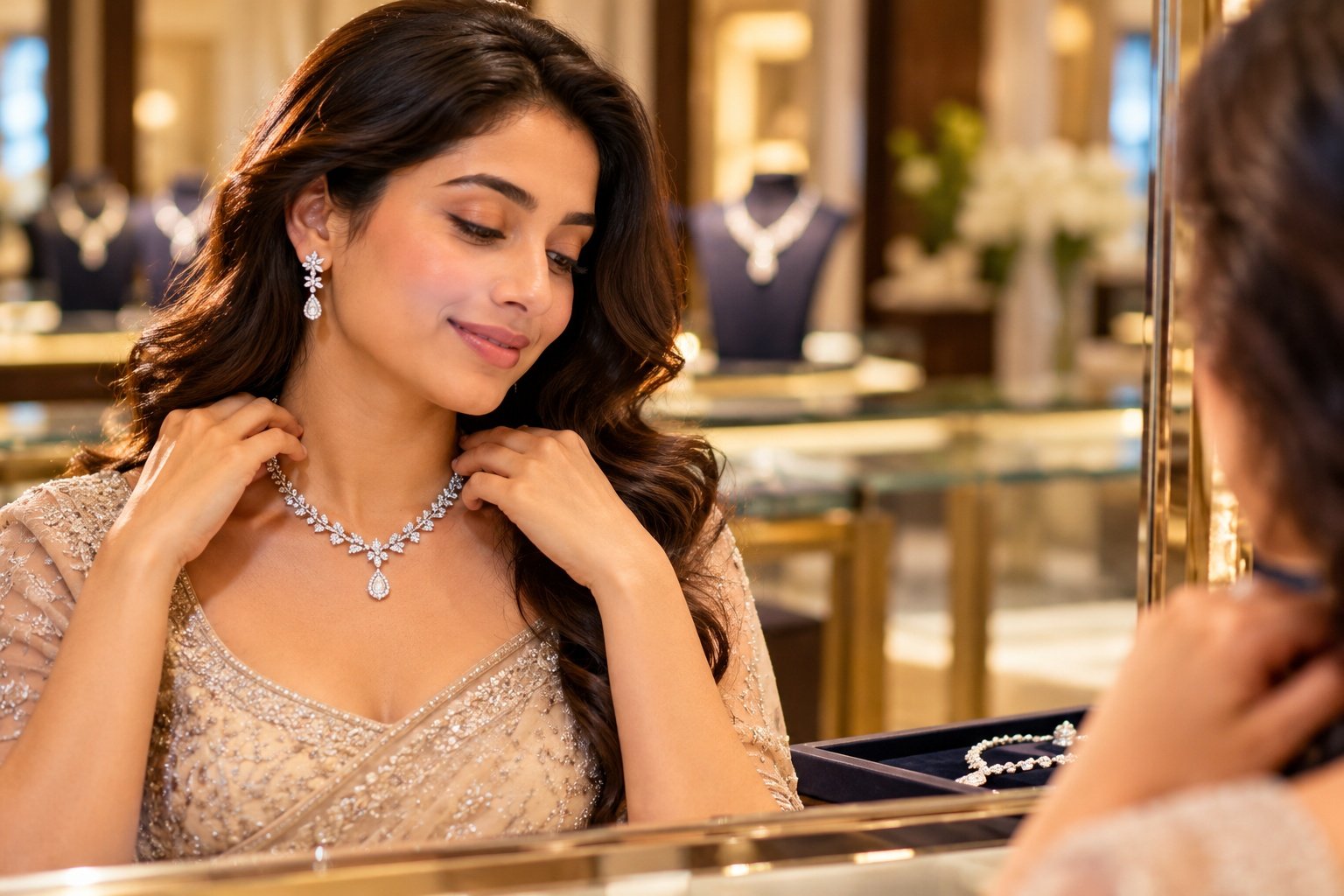
5. Understanding Diamond Necklace Prices and Your Budget
Diamond necklace prices can vary considerably. The final cost depends on diamond quality, total diamond weight, metal type, design complexity, and workmanship.
Establishing a budget before shopping can help you compare suitable options without being distracted by pieces that do not meet your requirements.
Consider the Complete Cost
When reviewing a price quotation, ask for a clear breakdown of the main cost components. Depending on the piece, these may include:
- The value of the diamonds.
- The weight, purity, and cost of the metal.
- Making or manufacturing charges.
- Applicable taxes.
- Any additional charges or services.
A transparent breakdown makes it easier to compare two necklaces fairly. A lower headline price does not automatically mean better value if the diamond specifications, metal weight, or workmanship differ.
Prioritise What Matters Most to You
Decide which characteristics are most important before making a final selection. You may prefer a larger-looking design, greater diamond brilliance, a particular metal, or intricate craftsmanship.
If your budget is limited, consider adjusting the design or diamond specifications rather than compromising on secure settings or purchase documentation.
A simple design with carefully selected diamonds can be an excellent choice when it matches your priorities.
Compare Similar Pieces
For a meaningful comparison, examine necklaces with similar metal purity, diamond specifications, total diamond weight, and design complexity.
Ask whether the quoted diamond weight refers to the total weight or individual stones. Check whether the same types of charges and taxes are included in each quotation.
Comparing equivalent products provides a clearer picture of value than comparing prices alone.
Ask About Buyback and Exchange Policies
If you think you may exchange the necklace in the future, review the store’s written policies before purchasing.
Buyback and exchange terms can differ. The value offered may depend on the jewellery’s condition, prevailing metal prices, diamond-related terms, and the specific policy.
Do not assume that the original purchase price will be recovered when reselling or exchanging the piece. Keep your invoice, certificate, and other relevant documents in a safe place.
6. Why Certification, Hallmarking, and Documentation Matter
Jewellery documentation helps you understand what you are buying and provides a useful reference for future servicing, insurance, or resale discussions.
Because diamond necklaces may contain several stones, it is important to understand which characteristics are documented and how the information relates to the finished piece.
Check the Diamond Documentation
Ask whether the diamonds have grading reports or other supporting documentation. The availability and type of documentation may depend on the size and nature of the stones.
Where an independent grading report is provided, check the issuing organisation and the report details. Make sure the document relates to the diamond or jewellery being offered.
Do not assume that every necklace containing diamonds automatically comes with an individual grading report for every stone.
Understand Gold Hallmarking
For gold jewellery, check the applicable hallmarking requirements and the details marked on the item. In India, consumers can refer to relevant Bureau of Indian Standards information to understand gold hallmarking and verify applicable details.
Confirm the stated gold purity and ask how the hallmark information corresponds to the metal used in the necklace.
Review the Invoice Carefully
The invoice should clearly identify the purchase and provide relevant pricing and product details. Review the information before completing payment.
Depending on the item, useful details may include metal purity, metal weight, diamond specifications, total diamond weight, making charges, taxes, and applicable certificate or identification information.
A complete invoice makes it easier to maintain accurate records and seek assistance if a question arises later.
Keep Your Documents Organised
Store your invoice, diamond documentation, warranty information, and care instructions together. If the necklace is valuable, you may also wish to ask your insurer what information is required for appropriate coverage.
Documentation remains useful after the shopping experience, particularly if the necklace needs repairs, cleaning, or a future valuation.
7. Checking Craftsmanship, Fit, and Everyday Comfort
A necklace’s beauty depends not only on its diamonds but also on the quality of its construction. Even an attractive design may be less practical if its chain is uncomfortable, its clasp is difficult to operate, or its stones are not securely set.
Inspect the Diamond Settings
Examine the necklace closely and look for consistent stone placement. The settings should hold the diamonds securely, without obvious gaps, rough edges, or irregular finishing.
If the design contains numerous small diamonds, check whether the pattern looks balanced and whether the stones appear consistently arranged.
Whenever possible, inspect the actual piece instead of relying entirely on photographs or display lighting.
Test the Clasp
The clasp is an important part of the necklace’s security. Ask to try opening and closing it, if appropriate, and check whether it feels secure and manageable.
A clasp should be practical for the person who will wear the necklace. A design that is difficult to fasten may become inconvenient, particularly if the piece is worn frequently.
Ask about the appropriate way to secure and inspect the clasp over time.
Consider Necklace Length
Necklace length affects how a piece sits and how it complements different necklines. A short necklace may sit near the collarbone, while a longer chain can create a different visual effect.
If possible, try the necklace with a similar neckline to the outfits you plan to wear. Pay attention to how the pendant rests, whether the chain moves comfortably, and whether the piece stays in position.
The right length is the one that feels comfortable and suits your personal style.
Assess Weight and Balance
A large or elaborate necklace may have more noticeable weight than a delicate pendant. Weight distribution also affects how comfortably the necklace sits.
Try the piece on, if possible, and check whether it pulls unevenly or feels restrictive. For a necklace intended for long events, comfort deserves as much consideration as appearance.
Ask About Maintenance
Find out whether the design requires special care, periodic setting checks, or professional cleaning. Detailed necklaces may need more careful handling than simpler designs.
Understanding these requirements before buying can help you decide whether the piece fits your lifestyle.
8. How to Shop Efficiently Around Rajpur Road
If you plan to spend a day around Rajpur Road, organising your jewellery shopping in advance can make the experience more enjoyable. Instead of visiting stores without a clear plan, begin by identifying your requirements and the designs you want to compare.
Decide on Your Purpose Before Visiting
Start by identifying why you are buying the necklace. A wedding purchase, an anniversary gift, and an everyday pendant may require different design priorities.
Write down your preferred style, approximate budget, metal choice, and intended use. This gives you a practical framework for comparing options.
You do not need to have every detail decided in advance, but knowing your main priorities helps keep the search focused.
Research Stores and Their Collections
Before visiting, check the store’s available collections, location, opening hours, and information about its diamond jewellery range. If you are interested in a particular style, contact the store to ask whether similar designs are available.
Frontier Jewellers Exclusive is one option to explore when researching diamond jewellery in Dehradun. Confirm current collections, product availability, pricing, and store details directly before planning your visit.
Online research can help you create a shortlist, but the final decision should be based on the actual piece, its specifications, and the documentation provided.
Make a Shortlist of Designs
Select a few styles that fit your budget and intended use. For example, compare a solitaire pendant with a multi-stone necklace if you are unsure which appearance you prefer.
Take notes on the diamond specifications, metal purity, total weight, price breakdown, and care requirements of each option.
A structured comparison can help you avoid choosing a necklace simply because it was the first attractive design you saw.
Ask Questions Before Making a Decision
A jewellery purchase should leave you feeling informed, not rushed. Ask the salesperson to explain the diamond specifications, metal purity, setting construction, invoice details, and relevant policies.
If something is unclear, request an explanation before making payment. Understanding the product helps you compare options confidently.
Allow Time for the Final Choice
Avoid making a purchase solely because you have already spent time visiting stores. If you find a suitable necklace, review its details carefully and consider whether it meets your original requirements.
If you are uncertain, take time to compare your notes or ask for additional information. A thoughtful decision is generally more rewarding than a hurried one.
9. Matching a Diamond Necklace With Your Personal Style
A diamond necklace should feel like a natural extension of your personal style. Although trends can offer inspiration, choosing a design that works with your wardrobe and preferences can make the piece more useful over time.
Consider Your Existing Jewellery
Look at the jewellery you already wear. If most of your pieces are delicate, a lightweight diamond pendant may fit naturally into your collection.
If you prefer bold accessories, a larger pendant or a more elaborate necklace may feel more appropriate. Choosing a piece that complements your existing jewellery can also make it easier to coordinate accessories.
Think About Your Wardrobe
The colours, fabrics, and necklines you wear frequently can help guide your decision.
A versatile pendant may pair well with everyday clothing, while a more elaborate necklace may be better suited to traditional outfits and formal occasions.
Consider whether the necklace will work with several outfits rather than only one specific look.
Choose Timelessness Over Temporary Trends
Fashion trends change, but well-chosen jewellery can remain meaningful for many years. Classic shapes, balanced proportions, and versatile designs often offer flexibility across different occasions.
This does not mean avoiding contemporary jewellery. It simply means choosing a modern design because you genuinely like it rather than feeling that you must buy it because it is currently popular.
Think About Future Use
If you are purchasing a necklace for a milestone occasion, consider whether you would also enjoy wearing it in the future.
A design that can be styled in different ways may offer greater practical value than a piece intended for only one event. However, if you specifically want a statement necklace for special celebrations, prioritising that purpose is perfectly reasonable.
The best choice is the one that aligns with your intended use, preferences, and budget.
10. Caring for Your Diamond Necklace After Purchase
Appropriate care can help maintain the appearance of your necklace and reduce avoidable wear. Diamonds are hard materials, but the complete jewellery piece—including its metal, chain, clasp, and settings—still requires careful handling.
Store the Necklace Separately
Store the necklace in a suitable jewellery box or soft pouch when it is not being worn. Keeping it separate from other pieces can help prevent scratches, tangling, and accidental damage.
For necklaces with intricate settings, use a storage arrangement that protects the diamonds and prevents the chain from catching on other jewellery.
Clean It Carefully
Everyday wear can leave jewellery with residue from skin oils, cosmetics, and other products. Follow the cleaning instructions provided by the jeweller.
Avoid using harsh chemicals or abrasive materials. If the necklace contains delicate settings, additional gemstones, or specialised finishes, seek advice before attempting home cleaning.
Professional cleaning may be appropriate for pieces that require more careful handling.
Remove Jewellery During Certain Activities
Consider removing your necklace before swimming, exercising, using cleaning products, or undertaking activities where the chain could snag or the jewellery could be exposed to damage.
Perfumes, lotions, and sprays may also leave residue on jewellery. Where practical, apply these products before putting on your necklace and allow them to dry.
Check the Chain and Settings Periodically
Over time, clasps, links, and stone settings may experience wear. Examine the necklace occasionally for visible damage or loose stones.
If you notice a problem, stop wearing the piece until it has been checked by a qualified professional. Avoid attempting to tighten delicate settings yourself.
Keep the Purchase Records Safe
Retain the original invoice, relevant diamond documentation, warranty details, and care instructions. These records can be useful if the necklace requires servicing or if you need to establish its purchase details later.
For a particularly valuable necklace, ask whether professional inspection or an appropriate insurance arrangement would be useful.
Conclusion
Buying a diamond necklace can be a memorable experience when you understand what to look for and give yourself enough time to compare your options. From solitaire pendants and contemporary designs to elaborate necklaces for weddings and celebrations, the right piece depends on your personal style, intended use, budget, and comfort.
Before making a purchase, consider the four Cs of diamond quality, compare the metal and craftsmanship, review the price breakdown, and check the relevant documentation. Pay attention to practical details such as necklace length, clasp security, stone settings, and maintenance requirements.
If you are exploring a diamond necklace shop in Dehradun, planning your visit around Rajpur Road can be a useful starting point. Research available collections, shortlist suitable designs, and ask clear questions before deciding. A well-informed purchase allows you to enjoy not only the necklace’s appearance but also the confidence that comes from understanding the jewellery you have chosen.
People Also Ask (PAA)
1. What should I check before buying a diamond necklace?
Before buying a diamond necklace, check the diamond’s cut, colour, clarity, and carat weight. Also examine the metal purity, craftsmanship, stone settings, clasp, invoice, and any available diamond documentation. Compare the complete price breakdown before making your final decision.
2. How do I choose the right diamond necklace for everyday wear?
For everyday wear, consider a lightweight pendant, a simple diamond chain, or a minimalist design. Choose a comfortable necklace length, a secure clasp, and a durable setting that suits your daily routine.
3. Which diamond necklace design is best for weddings?
Traditional diamond necklaces, elaborate multi-stone designs, and diamond chokers are popular choices for weddings. The best design depends on your outfit’s neckline, embroidery, personal preferences, and how comfortable you feel wearing the necklace for extended periods.
4. How can I compare diamond necklace prices?
Compare necklaces with similar diamond specifications, total carat weight, metal purity, and craftsmanship. Ask for a breakdown of diamond costs, metal value, making charges, and applicable taxes to understand the total price.
5. What is the difference between diamond carat and diamond size?
Carat measures a diamond’s weight, whereas its visible size depends on its dimensions and proportions. In a necklace containing multiple diamonds, total carat weight refers to the combined weight of the stones, not the weight of each individual diamond.
6. Is diamond certification important when buying a necklace?
Diamond grading documentation can help verify the characteristics of a diamond. Ask which documents are available and check that they correspond to the stone or jewellery being purchased. Documentation varies depending on the diamonds and the type of jewellery.
7. How do I find a suitable diamond necklace shop in Dehradun?
Research jewellery stores, explore their available collections, and compare designs within your budget. Before purchasing, check diamond specifications, metal purity, craftsmanship, pricing transparency, and applicable exchange or buyback policies.
8. How should I maintain a diamond necklace?
Store it separately in a jewellery box or soft pouch, follow the recommended cleaning instructions, and avoid exposing it to harsh chemicals. Periodically check the chain, clasp, and stone settings, and seek professional assistance if you notice any damage.
Frequently Asked Questions (FAQs)
1. What factors affect the price of a diamond necklace?
The price depends on diamond quality, total carat weight, metal type and purity, design complexity, craftsmanship, making charges, and applicable taxes. Comparing these details helps you assess the value of different necklaces.
2. Should I choose a gold or platinum diamond necklace?
Both metals can be suitable choices. Gold is available in different colours and purities, while platinum offers a naturally white appearance and is valued for its durability. Your budget, preferred style, weight preference, and maintenance requirements should guide your decision.
3. How can I tell whether a diamond necklace is well made?
Examine the consistency of the diamond settings, the finishing of the metal, the strength of the chain, and the security of the clasp. The necklace should feel comfortable and balanced when worn. Ask a qualified jewellery professional to inspect any details you are unsure about.
4. What documents should I receive when buying a diamond necklace?
Ask for a detailed purchase invoice and any applicable diamond grading reports, warranty information, and care instructions. The invoice should clearly identify the purchase and provide relevant product and pricing details.
5. Are diamond pendants suitable for gifting?
Yes. Diamond pendants are versatile gifts for anniversaries, birthdays, weddings, and other special occasions. Consider the recipient’s preferred metal colour, jewellery style, and everyday habits when selecting a design.
6. How should I maintain my diamond necklace?
Store it separately in a jewellery box or soft pouch, follow the recommended cleaning instructions, and avoid exposing it to harsh chemicals. Periodically check the chain, clasp, and stone settings, and seek professional assistance if you notice any damage.
7. Can I exchange a diamond necklace after purchasing it?
Exchange and buyback policies vary by jeweller and product. Check the written terms before purchasing, including any conditions related to the jewellery’s condition, valuation, deductions, and documentation. Do not assume that the full original purchase price will be refunded.
8. What should I consider when buying a diamond necklace for a special occasion?
Consider the occasion, outfit, neckline, preferred design, diamond quality, and budget. For weddings and formal events, you may prefer an elaborate necklace, while a minimalist pendant may be more versatile for everyday use. Comfort and secure settings should remain priorities regardless of the design.


Leave a Reply