

Summary
Discover the beauty and science behind the winterline in mussoorie, a rare atmospheric phenomenon that creates a colourful false horizon during winter evenings. Learn when and where to enjoy this special view, with Chalet by The Manor House offering a comfortable base for exploring Mussoorie at a relaxed pace.
What You’ll Learn
-
What the Winterline is and why it appears in the sky.
-
How temperature, sunlight and air layers create the false horizon.
-
The best months and viewpoints for watching it.
-
Simple tips for enjoying and photographing the phenomenon.
-
Why choosing the best homestay in Mussoorie can make your winter trip more comfortable.
Introduction
Mussoorie is known for its green hills, colonial buildings, peaceful walking roads and beautiful sunsets. But during the colder months, the sky above the town can show something much more unusual. A sharp band of colour appears near the horizon, creating the feeling that there is a second sunset or another line between the sky and the hills.
This rare sight is called the winterline in mussoorie. It is one of the most interesting natural experiences that visitors can enjoy during winter. The effect may look like a painted line across the sky, but it is connected with sunlight, air layers, moisture, dust and the shape of the surrounding valley.
Many people see the Winterline for the first time and wonder whether it is a cloud, a mountain shadow or a special kind of sunset. In reality, it is an atmospheric optical phenomenon that is not fully explained by one simple cause.
In this article, we will understand what the Winterline is, why it appears, when you can see it, which places offer good views and how to enjoy the experience during a Mussoorie trip. We will also look at why staying at the best homestay in Mussoorie can make winter sightseeing more comfortable.
What Is the Winterline in Mussoorie?
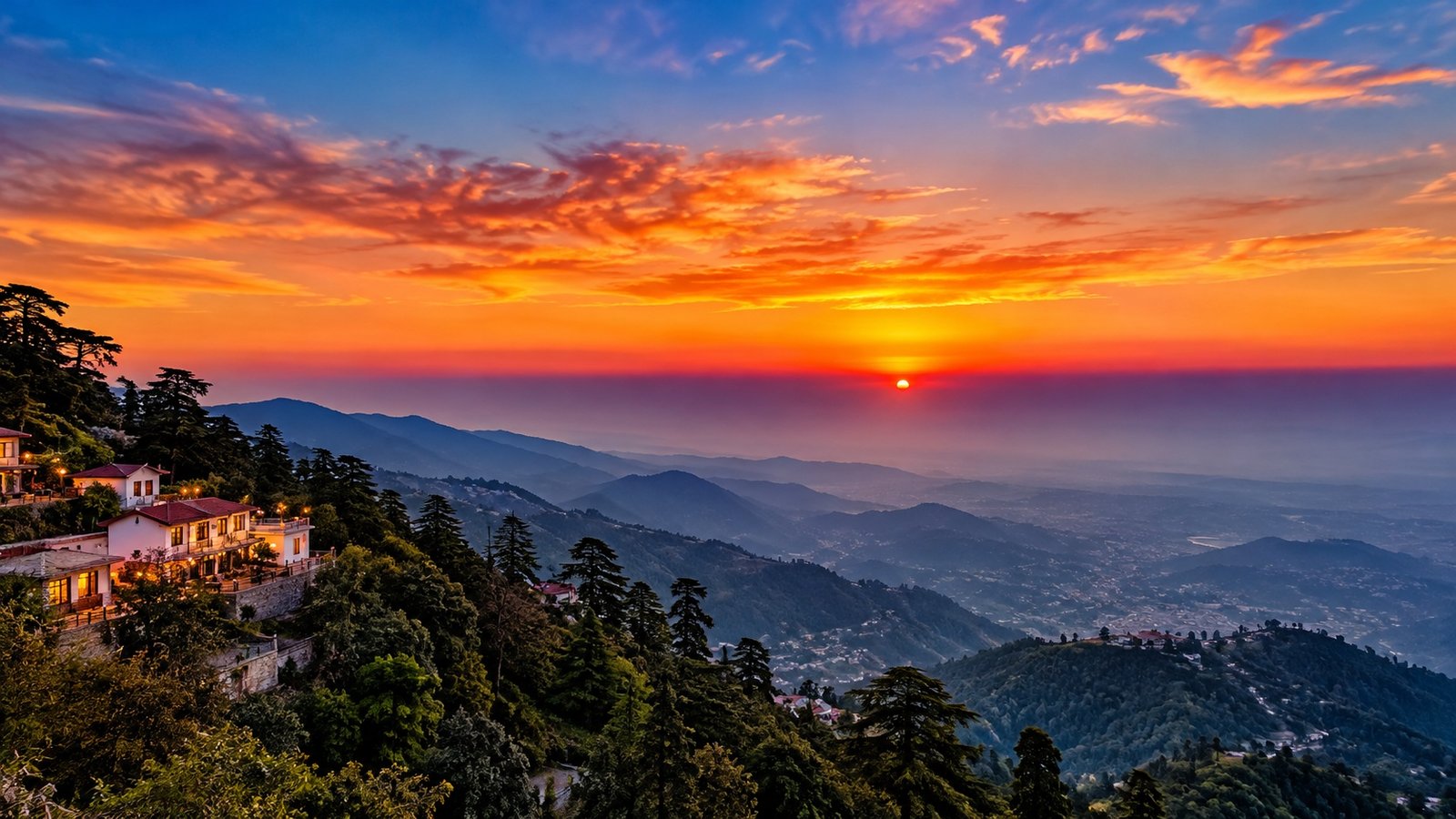
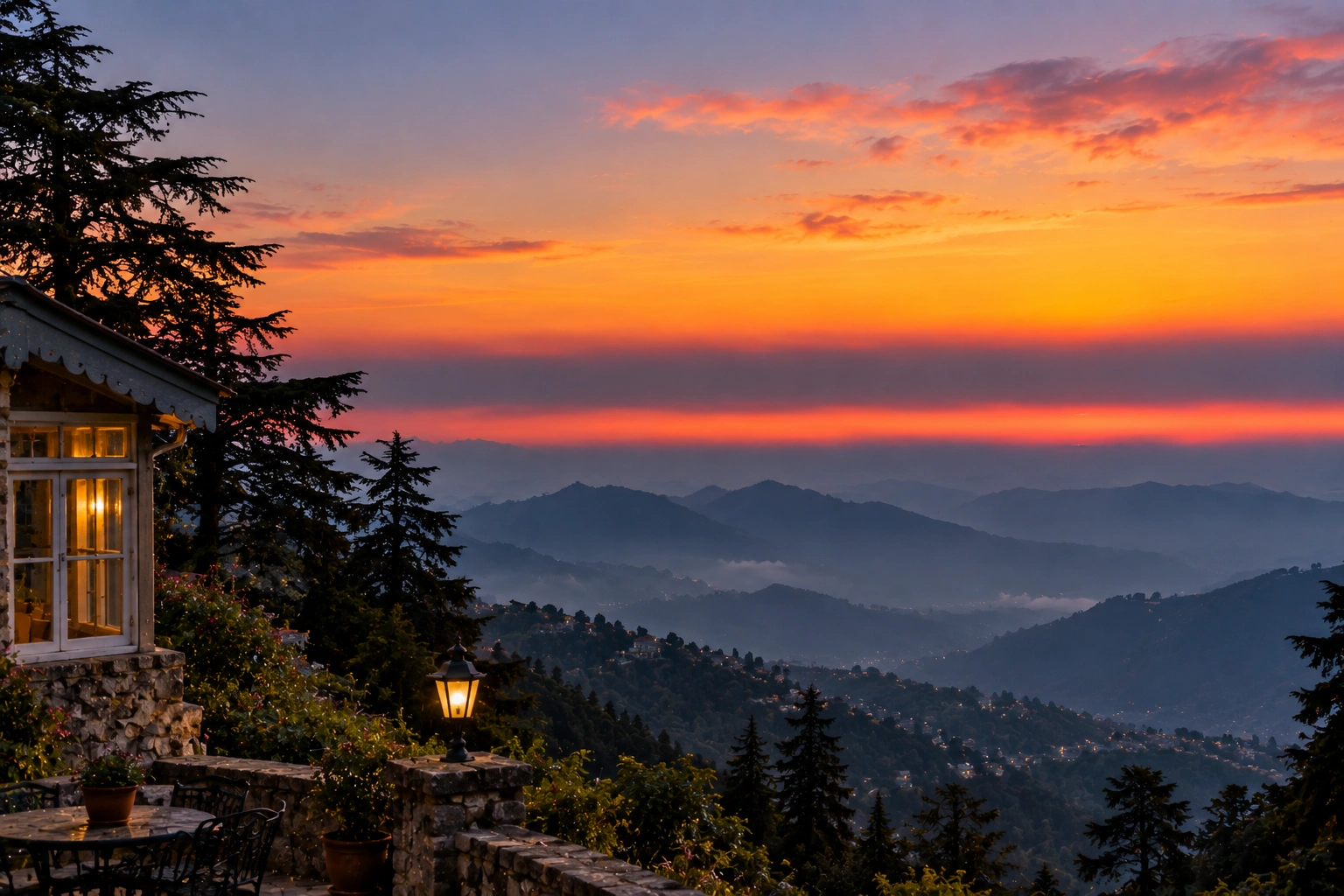
The Winterline is a natural atmospheric effect that appears around sunset during the colder months. It looks like a clear horizontal band across the western sky, usually above the darker hills or valley.
The upper part of the sky may appear bright with shades of yellow, orange, pink or red. Below this colourful band, the sky can look darker, grey, mauve or purple. This creates the impression of a false horizon.
A normal sunset usually appears as the sun moving below the actual horizon. During the Winterline, the light and colour seem to form another line above the real horizon. This is why it is also called a “false horizon.”
Why Is It Called Winterline?
The phenomenon is mostly noticed during winter because the air conditions are more suitable for creating the effect. In Mussoorie, it is generally associated with the months from October or November to January or February.
The exact period can change depending on the weather. Clear skies, cold mountain air and the condition of the atmosphere all affect visibility.
The name “Winterline” simply refers to the seasonal nature of the phenomenon. It is not a physical line in the sky and cannot be touched or reached.
What Does the Winterline Look Like?
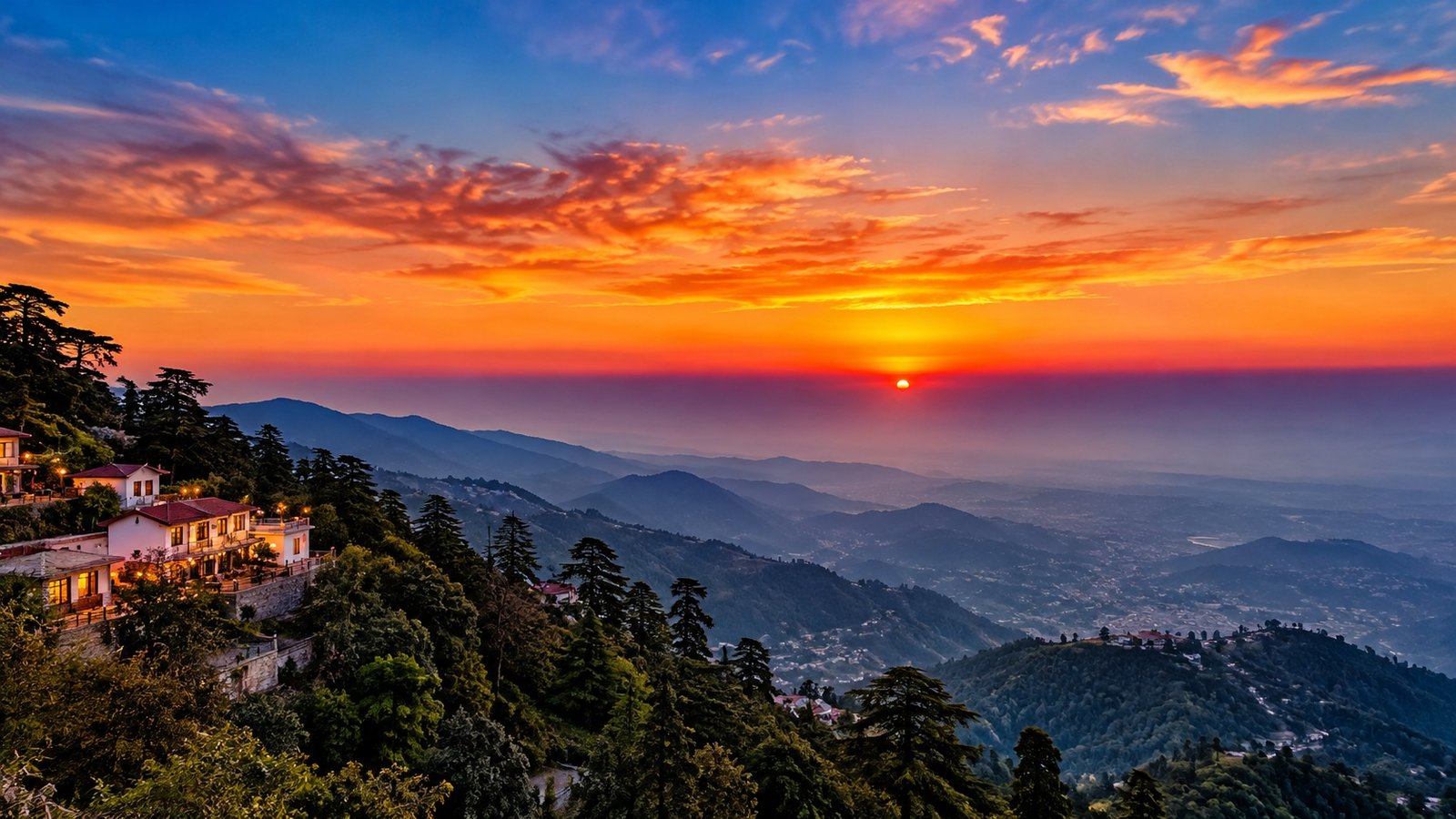
The appearance may change from one evening to another. On some days, it may look like a thin orange line. On other days, it may appear as a wide strip of grey, mauve, yellow or red.
You may notice:
-
A dark band above the distant valley.
-
A bright orange or yellow line near the upper edge.
-
Red and pink colours spreading across the sky.
-
A soft separation between the lower and upper sky.
-
A second-horizon effect above the actual hills.
-
A glowing sunset that lasts for a few extra moments.
The effect is usually short-lived. It may become visible just before sunset and continue briefly after the sun disappears behind the hills.
Is It a Second Sun?
No, the Winterline is not a second sun or a second horizon in the physical sense. It is an optical effect created by the way sunlight passes through different layers of air.
The real horizon remains where the land and sky meet. The bright or dark band only gives the impression of another horizon.
This is what makes the Winterline so fascinating. It looks mysterious, but it is connected with natural conditions in the atmosphere.
Why Is Mussoorie Known for This Phenomenon?
Mussoorie has a special geographical setting. The town sits on a mountain ridge above the Doon Valley, with the Shivalik hills and plains spread out towards the west and south.
During winter, cold air stays around the higher mountain areas while warmer air and atmospheric particles may remain closer to the valley. When sunlight passes through these layers at a particular angle, the false horizon effect can become visible.
The winterline in mussoorie is especially attractive because the town offers several open viewpoints where visitors can watch the colours spread across the valley.
The sight is not guaranteed every evening, but when the conditions are right, it can become one of the most memorable parts of a winter trip.
The Science Behind Mussoorie’s Famous False Horizon
The Winterline may look magical, but it has a connection with basic atmospheric science. The exact process can be complex, and experts do not always describe it in exactly the same way. However, sunlight, temperature differences, moisture and tiny particles in the air are believed to play important roles.
The Role of Cold Mountain Air
During winter, the air around Mussoorie becomes colder, especially after sunset. The air in the Doon Valley below may be warmer in comparison.
This difference can create a condition known as temperature inversion. Normally, air becomes cooler as it rises. During a temperature inversion, a layer of warmer air may remain below cooler air.
This creates different layers in the atmosphere. Each layer may have a different temperature, density and amount of moisture or dust.
When sunlight passes through these layers, the light may bend or change direction slightly. This process is called refraction.
What Is Refraction?
Refraction means the bending of light when it moves through materials or air layers with different densities.
You may have noticed a similar effect when a pencil looks bent inside a glass of water. The pencil is not actually broken. The light changes direction as it moves between air and water.
A related effect can happen in the atmosphere. When sunlight passes through air layers with different temperatures and densities, its path may bend slightly.
During the Winterline, this bending of light may help create a visible band that looks like a second horizon.
How Dust and Moisture Affect the View
The air is not completely empty. It contains tiny particles of dust, moisture and other atmospheric material.
Some of these particles may rise from the plains and valley areas. During winter, the movement of air can trap them in lower layers beneath cooler mountain air.
These particles can scatter and reflect sunlight. As the sun moves towards the horizon, the light passes through the atmospheric layers at a low angle. This can make the colours more noticeable.
The result may include:
-
A darker lower sky.
-
A brighter line above the dark area.
-
Red, orange and yellow colours.
-
A mauve or grey strip near the horizon.
-
A soft glowing effect after sunset.
The exact colour depends on the amount of moisture, dust, haze, cloud cover and the angle of sunlight.
Why Does the Sky Look Divided?
The false horizon appears because different parts of the atmosphere are receiving and scattering sunlight in different ways.
The lower part of the sky may look darker because the sun has already moved below the visible horizon from the viewer’s position. At the same time, light can still reach higher atmospheric layers and create a brighter band.
This creates a visual separation between the darker valley and the brighter sky above it.
Is the Science Fully Confirmed?
The Winterline is widely connected with atmospheric refraction and temperature differences, but the exact mechanism is not always explained in a single, fully confirmed model.
Some sources describe the role of dust and moisture, while others focus more on temperature inversion and the way light passes through air layers.
It is better to understand the Winterline as a combination of atmospheric conditions rather than one simple event.
This is also why the sight can look different from one day to another. A clear evening may create a sharp line, while haze or clouds may make it soft or hide it completely.
Why Winter Conditions Are Important
Winter is suitable for the Winterline because the atmosphere around the hills and valley often develops stronger temperature differences.
The colder mountain air, warmer valley air and low-angle sunlight near sunset may come together to create the right conditions.
The phenomenon is generally seen between October and February, although the best period can vary. The Uttarakhand tourism portal mentions that the Winterline is usually visible from mid-October to mid-January.
The important point is that winter does not automatically guarantee a Winterline. The sky must also be clear enough for the effect to be visible.
When and Where Can You See the Winterline Clearly?
The best time to see the Winterline is during the colder months, especially from late autumn to winter. In Mussoorie, November, December and January are commonly considered good months for trying to see it.
However, the phenomenon depends on weather conditions. A cloudy, foggy or rainy evening may completely block the view.
Best Months to Watch the Winterline
The Winterline is usually associated with:
-
Mid-October.
-
November.
-
December.
-
January.
-
Early February in some years.
November and December can be especially pleasant for travellers who want to enjoy winter views, cold evenings and sunset photography.
The exact dates are not fixed. The phenomenon may appear earlier or later depending on the weather and atmospheric conditions.
Best Time of the Day
The Winterline appears around sunset. You should reach your viewpoint before the sun begins to disappear.
A good plan is to arrive around 20–30 minutes before sunset. This gives you enough time to find a clear place, watch the sky change and notice the colours before the main effect appears.
Do not leave immediately after the sun disappears. Sometimes the false horizon becomes more visible during the short period of twilight.
Best Places to See the Winterline
You do not always need to travel far from Mussoorie town to enjoy the view. Several open areas and viewpoints can offer a good view of the western sky.
1. Lal Tibba
Lal Tibba is one of the most popular viewpoints in the Mussoorie-Landour area. It offers wide views of the surrounding hills and distant mountain ranges.
Because of its open setting and elevation, it can be a good place to watch the Winterline. Try to reach early, especially during weekends and holiday periods.
The view may be even more enjoyable when the sky is clear and the distant ridges are visible.
2. George Everest’s House
The George Everest area is known for its open landscape and wide views towards the Doon Valley. It can be a peaceful place to watch the sunset away from the busiest parts of town.
The open horizon makes it useful for photography, but visitors should check local access conditions and travel safely, especially in winter.
3. Cloud’s End
Cloud’s End is another scenic area surrounded by forest and mountain views. It is known for its peaceful atmosphere and natural setting.
If the western sky is open and the weather is clear, the area may offer a good chance to notice the Winterline.
4. Mall Road and Gandhi Chowk
You may also see the Winterline from parts of Mall Road, Gandhi Chowk and other open viewpoints in central Mussoorie.
These places are convenient for visitors who do not want to travel to a distant viewpoint. However, buildings, trees and crowds may block parts of the horizon.
If you are staying at the best homestay in Mussoorie, you can plan your evening around a nearby viewpoint and return comfortably after sunset.
Weather Conditions Matter More Than the Date
Even if you visit Mussoorie in December, the Winterline may not appear. Clear weather is one of the most important factors.
Try to choose an evening with:
-
Clear or mostly clear skies.
-
Less fog.
-
Limited cloud cover.
-
Good visibility towards the Doon Valley.
-
Dry and calm weather.
-
No heavy rain or strong haze.
Simple Tips for Watching the Winterline
Keep these practical points in mind:
-
Reach the viewpoint before sunset.
-
Check the weather before leaving.
-
Carry a warm jacket, cap and gloves.
-
Choose a place with a clear western view.
-
Avoid standing too close to steep edges.
-
Carry a phone or camera if you want pictures.
-
Do not expect the phenomenon to appear every evening.
-
Stay for a few minutes after sunset.
-
Respect local areas and avoid littering.
-
Return before the roads become too dark or foggy.
A relaxed plan is better than rushing only for one photograph.
Why the Winterline Looks Like a Second Sunset
The Winterline is often described as a second sunset because it creates the feeling that the sun has left one horizon but is still lighting another part of the sky.
This visual effect happens during the short period when daylight is fading but the upper atmosphere may still be catching sunlight.
The Real Horizon and the False Horizon
The real horizon is the point where the land or distant hills appear to meet the sky. During sunset, the sun moves below this line.
The false horizon appears as a separate horizontal band above or near the real horizon. It may look like a dark strip with a bright edge.
This makes the sky appear layered:
-
The distant hills form the lower landscape.
-
A dark grey or mauve band appears above them.
-
A bright yellow or orange line sits near the upper edge.
-
The sky above continues to glow with sunset colours.
The effect can look like a second horizon floating in the sky.
Why the Colours Become So Strong
Sunlight contains many colours. During sunset, the light travels through a longer path in the atmosphere. Blue light is scattered more strongly, while warmer colours such as red, orange and yellow may become more visible.
Dust, moisture and haze can further change the way the light looks.
During the Winterline, these colours may appear in separate bands. This is why the sky can show a combination of:
-
Soft blue.
-
Golden yellow.
-
Bright orange.
-
Deep red.
-
Pink.
-
Mauve.
-
Grey-purple.
The colours may change quickly, so the scene can look different every few minutes.
Why the Effect Looks Like a Painted Line
The line looks sharp because the difference between the darker lower layer and the brighter upper sky can be quite strong.
The shape of the valley also helps. Mussoorie looks towards the Doon Valley and the Shivalik ranges, creating a broad landscape where the horizontal band can be seen clearly.
From a good viewpoint, the line may stretch across a large part of the sky. This makes it look almost artificial, like someone has drawn a bright line between two sections of the sunset.
Why It Is Difficult to Photograph
The Winterline can be beautiful in real life but difficult to capture correctly in a photograph.
The human eye can notice a wide range of light and colour, while a phone camera may struggle with the bright sky and dark foreground at the same time.
For better results:
-
Clean your camera lens.
-
Keep the phone steady.
-
Avoid using too much zoom.
-
Tap on the brighter part of the sky.
-
Take several pictures.
-
Try both wide and closer frames.
-
Avoid using heavy filters.
-
Keep the colours natural.
A good photograph should show the contrast between the dark lower band and the brighter sky above it.
Is It the Same as a Normal Sunset?
The Winterline is connected with sunset, but it is not exactly the same as a normal sunset.
A normal sunset happens every day when the sun moves below the horizon. The Winterline is a special atmospheric effect that may appear during certain winter conditions.
This means you can enjoy a beautiful sunset without seeing the Winterline. The Winterline is an extra natural feature that may appear when the atmosphere is suitable.
That uncertainty is part of its charm. You can plan to watch the sky, but nature decides whether the line will appear.
Why the Winterline Makes Mussoorie’s Winter Evenings Special
Winter in Mussoorie has a different atmosphere from the busy summer season. The air feels colder, the hills may look clearer and the evenings become quieter.
The Winterline adds another reason to slow down and spend time outdoors before returning to a warm and comfortable stay.
A Peaceful Evening Experience
Watching the Winterline is not an activity that requires a busy schedule. You only need a good viewpoint, suitable weather and a little patience.
You can spend the evening:
-
Walking to a viewpoint.
-
Enjoying a cup of tea.
-
Watching the changing sky.
-
Taking photographs.
-
Sitting quietly with family or friends.
-
Exploring nearby cafés.
-
Returning before the night becomes too cold.
For many visitors, the experience becomes more meaningful because it is simple. There is no need for a large attraction or a long activity list.
A Good Experience for Photographers
The Winterline is a favourite subject for photographers because it offers strong colours and natural layers.
The combination of old hillside buildings, dark deodar trees, distant mountains and a glowing sky can create beautiful frames.
A wide-angle photograph may show the full landscape, while a closer frame can focus on the false horizon.
Try to include a foreground element such as:
-
A stone wall.
-
A deodar tree.
-
An old cottage.
-
A lamp post.
-
A hillside road.
-
A balcony railing.
-
A distant mountain ridge.
These details can make the photograph feel more connected to Mussoorie.
Why Winter Is a Good Time for a Slow Trip
Mussoorie is often busy during peak summer holidays. Winter can feel calmer, especially on weekdays and away from the busiest tourist areas.
The cold weather encourages a slower style of travel. Instead of trying to visit many places, you can enjoy a few experiences properly.
A stay at the best homestay in Mussoorie can support this kind of trip. You can return after sunset, enjoy a warm room and plan the next day without feeling rushed.
Staying Near the Main Town
Choosing accommodation near the main town can be useful during winter because sunset arrives early and roads may become cold or foggy after dark.
A best homestay in Mussoorie can be a comfortable option for travellers who want to explore viewpoints, Mall Road, cafés and nearby attractions while having a peaceful place to return to.
If your plan includes evening walks or sunset views, check the distance between your stay and the viewpoint before leaving.
A best homestay in Mussoorie should offer more than just a place to sleep. Clean rooms, comfortable sitting areas, warm interiors, helpful hosts and convenient access can make a winter holiday easier.
A Comfortable Base for Winterline Watching
Travellers who want to enjoy the winterline in mussoorie should keep their evening schedule flexible. The sight depends on weather, so it is better not to plan the entire trip around one sunset.
You can visit a viewpoint if the sky is clear. If clouds cover the horizon, you can instead enjoy a café, explore old streets or spend a relaxed evening at your accommodation.
Chalet by The Manor House can be considered by visitors looking for a comfortable stay in Mussoorie. Its location near the main town can make it easier to plan sightseeing and return after an evening outdoors.
Respect the Natural and Local Environment
While watching the Winterline, remember that the viewpoint is part of a mountain environment. Avoid leaving plastic bottles, food wrappers or other waste behind.
Also, do not enter restricted areas or stand near unsafe edges for a photograph. Winter evenings can become dark quickly, and fog may reduce visibility.
A responsible traveller can enjoy the beauty of Mussoorie without disturbing the surroundings.
The Winterline Is More Than a Photograph
The Winterline is attractive in pictures, but the real experience is about watching the sky change slowly.
You may notice the colours becoming softer, the valley turning darker and the mountains disappearing into the evening haze. These small changes make the experience feel peaceful.
It is a reminder that some of the best travel moments are not always planned activities. Sometimes, simply standing quietly and watching the sky can become the highlight of a trip.
Conclusion
The winterline in mussoorie is one of those rare natural sights that makes a winter eve ning feel truly special. As the sun begins to set, the colourful false horizon creates a beautiful layer of light across the mountain valley, making the surrounding hills look even more magical. With clear skies, the right viewpoint and a little patience, this unusual phenomenon can become one of the most memorable experiences of your Mussoorie trip.
If you are planning to enjoy this beautiful sight at a relaxed pace, Chalet by The Manor House offers a comfortable base for exploring the town, nearby viewpoints and peaceful evening spots. Choosing the best homestay in mussoorie can make your winter getaway more convenient, especially when you want to return to a cosy place after enjoying the sunset and mountain views.
So, keep your camera ready, choose a clear winter evening and take some time to enjoy the peaceful beauty of Mussoorie. Sometimes, it is the simple combination of cold air, glowing hills and a magical winterline that makes a holiday truly unforgettable.
People Also Ask
Can the Winterline be seen from Mall Road in Mussoorie?
Yes, the Winterline in Mussoorie can sometimes be seen from Mall Road and other west-facing viewpoints. However, clear weather and an open view of the horizon are important for better visibility.
Does the Winterline appear every evening during winter?
No, it is not guaranteed every evening. The phenomenon depends on clear skies, atmospheric conditions, temperature differences and visibility across the valley.
Can children enjoy the Winterline experience in Mussoorie?
Yes, children can enjoy watching the colourful horizon, especially from easily accessible viewpoints. Parents should choose safe viewing areas, carry warm clothing and avoid standing too close to edges after sunset.
Is the Winterline visible during snowfall in Mussoorie?
The Winterline is usually easier to see on clear winter evenings. Snowfall, fog, thick clouds or poor visibility may block the horizon, so snowfall does not necessarily mean better chances of seeing it.
How long does the Winterline remain visible?
The Winterline is generally a short-lived sight that appears around sunset and may remain visible for only a few minutes. It is best to reach the viewpoint around 20–30 minutes before sunset so you do not miss the changing colours.
Frequently Asked Questions
Is the Winterline suitable for photography?
Yes, the Winterline can create beautiful photographs, especially when the sky is clear and the horizon has orange, pink or purple shades. Use a wide-angle lens to capture the sky, hills and surrounding landscape together.
What should I carry while watching the Winterline?
Carry a warm jacket, cap, gloves and comfortable shoes, as temperatures can drop quickly after sunset. A phone or camera with enough battery is also useful for capturing the view.
Is the Winterline visible from every viewpoint in Mussoorie?
No, the Winterline is not visible from every location. Open viewpoints facing the sunset and the distant valley usually offer better chances than areas blocked by buildings, trees or hills.
Can I enjoy the Winterline without going on a trek?
Yes, you do not need to go on a difficult trek to enjoy it. Several accessible viewpoints and open areas around Mussoorie can offer good views, depending on the weather and visibility.
What is the best way to enjoy a Winterline evening?
Reach your chosen viewpoint before sunset, check the weather, keep your plans flexible and avoid rushing back immediately. Enjoying the changing colours quietly can make the experience more memorable.


Leave a Reply